
The Cloud9 Marketing blog covers trending digital marketing topics, industry tips and advice as well as, resort marketing tactics.

So you’ve launched your website and opened your doors, but what’s next? To fully target your ideal demographic and start bringing in consistent sales, you’ll need to start marketing your business on social media. But even something as simple as choosing a social platform can be harder than you’d think…

In order to maximise your results, you need to make sure you choose a platform suitable to your business goals. Many small businesses make the mistake of tackling every social platform channel at once. However, we recommend starting with the most popular platform, and leaving the more experimental campaigns for later on.  Let’s take a look at some of the most major social platforms, and see how they are suited to your audience, preferences, and other demographics.

Facebook

Facebook is the universal social media network, with more than 2 billion monthly users. With over a quarter of the world’s population scrolling through their news feeds, you have an unparalleled opportunity to reach virtually anyone, anywhere. However, because it’s so vast, you’ll need to be strategic when it comes to generating engaging paid and organic content. You’re up against a lot of competition, so post content that sets you apart from other similar companies.

One great advantage of Facebook is that it has a very low cost of advertising, with many advertisers saying they spend less than $1 per lead. For more information, here’s how you can optimize your Facebook Business page for success.

Instagram

As the fastest growing social channel, brands are rushing to Instagram to showcase their business to a largely younger audience. With over 800 million monthly active users, Instagram commands a 2000% better engagement rate than Twitter, and 58% better than Facebook.

Instagram is great for small businesses who want to turn heads with visually interesting products or services, like real estate businesses, local restaurants, and retail stores. Features like Instagram Stories and Instagram Live make it easy to connect with your consumers, as you can humanize your brand and build trust with your customers through these more candid moments.

LinkedIn

With a community of over 450 million professionals that love to engage with other brands, LinkedIn is the typical choice for B2B businesses whose main goal is lead generation. Allowing you to access a whole new demographic you may not have been able to find on other platforms, LinkedIn offers a targeting unparalleled in the realm of digital advertising. However, while the temptation may be to develop as many connections as possible, fewer, more personal connections can often provide greater value.

Youtube

This one may seem unexpected, but as the world’s largest video site (and second largest search engine), Youtube is definitely something you should eventually turn your efforts towards.

Video is now surpassing text as the best medium to engage with your online target audience, as it commands more attention and evokes emotion faster than written content. While it requires a bit more effort than other platforms, it’s really not as difficult as it seems. Weekly content doesn’t need to be completely entertainment orientated, as how-to demonstrations and interviews do just as well. Once you establish yourself on the video sharing site, it also makes it very easy collaborate and build credible connections with other relevant local businesses and influencers.

With a bit of practice, social media marketing is an art form that you can master. However, we know that posting consistent content across your social media channels is not the easiest thing to do when running a small business. If you need any help getting started, Cloud9 Marketing can create and manage your social media campaigns with effective strategies that drive quality engagement. To see if our social media management works for you, please get in contact! We’d love to help.


Ah, the wisdom of the crowd. While turning to a crowd for inspiration or feedback is nothing new, the Internet has given crowdsourcing the opportunity it needed to shine.

Social media is now a multiplayer experience that relies on collective, thoughtful engagement, and makes it easy for businesses to engage customers, solve problems, and innovate on products or services. Recently Pepsi, Lego and Amazon joined a long list of savvy companies using crowdsourcing as a tool for marketing and product development – and you should too!

Whistler sees an influx of visitors over the summer, meaning now’s the time that your crowdsourcing efforts will have maximum outreach. Here’s how small businesses can benefit from crowdsourcing, and why now is the perfect time to start.

What is crowdsourcing?

Companies use crowdsourcing as a way to turn to Internet users for services or ideas, including opinions and feedback, ideation competitions, and open calls for ideas around a specific theme.

A great example of a company that has successfully used crowdsourcing for content creation is LEGO, and their LEGO Ideas Platform: Users can submit ideas for new LEGO sets, and vote on other submissions, and LEGO review and select popular submissions, and turn them into a reality. Not only does this platform support idea generation at LEGO, but it also allows them to validate the demand for those ideas.

How can crowdsourcing benefit small businesses?


You’ll have an endless audience

Traditional focus groups are expensive, intensive, and often have dominant participants that skew the entire session. Crowdsourcing, on the other hand, offers a seemingly endless supply of crowd, meaning you can reach a larger, more diverse population, and reduce the risk of participants influencing one another. You can target tourists, locals, consumers, enthusiasts, and even other local businesses, to raise brand awareness, demand validations, and tackle unsolved problems.

You’ll get immediate results, at no expense

The Internet never sleeps, and neither should your engagements. Consumers today are very keen to be involved in the companies that they buy from, so by tapping into your audience, you’ll be able to solicit immediate feedback from a passionate and engaged consumer base.

Unlike traditional focus groups, online crowdsourcing is incredibly cost-effective and often free – as no contracts are required, and you only pay for the resources you need.

You’ll get great new ideas for your company

While larger companies can afford to test and try many different services and not worry about immediate ROI, small businesses do not have that luxury. Your customers are a powerful resource capable of generating great content for your brand, and by hearing directly from them you can determine what they would find useful, and skip straight to success.

For a fresh approach to issues and problems, break up a big task into many small ones, and ask your consumers for their input. They’ll give suggestions, ask questions, and hopefully offer valuable feedback that will illuminate new marketing pathways and ideas.

You’ll increase your customer engagement

Who doesn’t love a bit of buzz around their business?

Crowdsourcing allows you to solicit engagement and simultaneously publicize your organisation. By asking your customer base “What kind of products or services that we do not currently have would you like to see us provide?” , you’ll show you care about their opinion, and you’ll spark an easy initial conversation. From there, you can continue interactions and develop a positive relationship with your consumers, who will in turn become loyal brand advocates.

We understand that summer is a busy time for local businesses, and crowdsourcing may not be at the top of your to-do list. However, crowdsourcing is an important resource to be utilized, and can help your consumers become actively engaged in the work your company does. If you have any queries, or are hoping to get started but simply don’t have the time, here at Cloud9 we would love to help. As a full-service marketing agency, we offer services across the board, including strategy consultancy and monthly social media services. You can get in contact here.


In order to gain and retain loyal customers, you have to create a seamless online experience that leaves users with a lasting positive impression of your brand. Every single touchpoint with your company plays a role in converting your customer, so each one must be faultless.

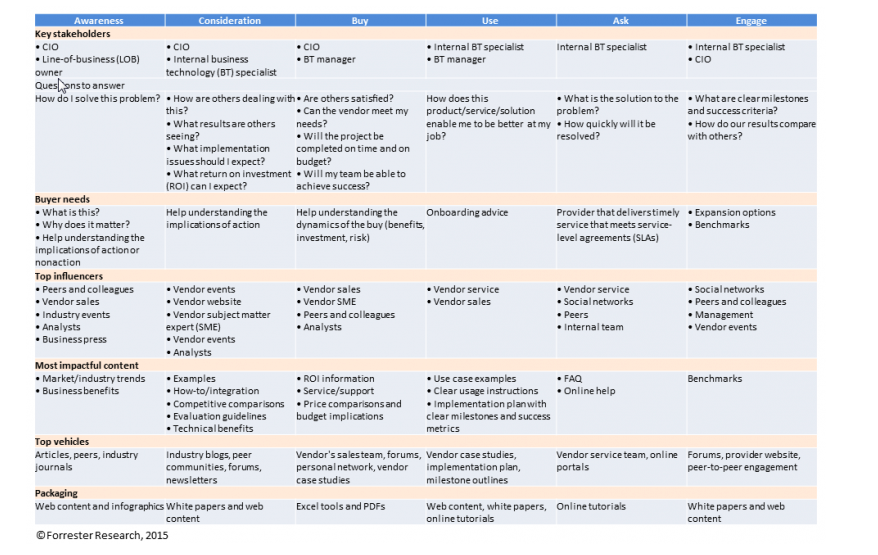
A customer journey map is a visual representation of every experience your customers have with you. It shows you the route your customers take when navigating your website, and allows you to record every touchpoint. Developing a customer journey map can optimize your digital marketing strategy, as you can understand and address your buyer’s feelings, motivations and questions.

Here’s a breakdown of what customer journey mapping is, how it can help reveal gaps or issues within your strategy, and how to get started planning your own map.

What is a customer journey map?

The purpose of a customer journey map is very simple: it helps you understand the route your customers take when buying and using your products and services. It serves to tell the story of your customer’s experience, from their initial engagement with your brand, into hopefully a long-term relationship.

By charting and organizing your customer’s touchpoints with your brand, you’ll gain a holistic view of the process they go through when using your services.

Why do I need it?

A customer journey map is a powerful tool that allows you to clearly understand your audience’s needs. Here’s why it’s so effective.

It gives you clarity

Firstly, it gives you a complete overview of where and when customers are interacting with your business. You can understand the context of your users, and gain a clear picture of their needs, hesitations and potential concerns. From there, you can tailor your online experience and work towards establishing a long-term relationship with customers, based on consistency and trust.

You can address gaps and issues

While you can reward yourself for all the fantastically positive touchpoints you have created, you will also be able to see where you are currently lacking content and losing customers. This works in your favour, so fear not! Understanding where you need to invest time and money means you can immediately develop priorities to address these. You can then take steps to improve certain aspects of your customer’s experience.

Great! How can I create my own?

Now you’re fully aware of the benefits of a customer journey map, you’re probably wondering how to get started? As you can imagine, mapping out the customer experience takes some time, but it’s definitely worth the effort.

We recommend you start out by listing all online touchpoints your company has with customers. Keep it simple, and note what message your customer is receiving at each encounter, and what platform they receive this on. Once you’ve synchronized your messages throughout your customer’s journey, you can put together your map.

Below is an example of a customer journey map from Forrester Research. However, if you fancy something a little more visual, there are many tools such as Microsoft Visio and Glizzy that turn your data into flow charts and diagrams.


We understand that customer journey mapping is a complex process! At the end of the day, each and every map is produced differently, depending on your own, personal preferences. If you need help connecting with your customer and improving touchpoints online, as a full-service marketing agency here at Cloud9 Marketing, we would be happy to help. To arrange a strategy consultancy that focuses on your consumer’s journey, you can find us here – we look forward to hearing from you!

Can you identify your exact online target audience? If no immediate image or prototype pops into your head, you may need to re-evaluate your marketing strategy.

You could have the most visually appealing website to ever exist, but it will fail to make an impact if it’s not reaching the right audience. To make sure your hard work pays off, you’ll need to find out who your customers are and where they hang out online. By identifying your primary audience’s needs, you can increase your online conversations, optimize your social media marketing, and boost organic traffic.

Why identifying your target audience matters

If you know exactly what your customers want, you can optimize your site to maximise the likeliness of them coming across it in their online searches.

The same goes for what your customers don’t want- by understanding their state of mind you can structure and prioritise content on your site, and leave out what you know won’t interest them. Here are a few ways to identify your target audience.

Educated assumptions are a good place to start…

But they definitely wont deliver entirely effective results. If you have no paying customers yet, trust your instincts and make educated guesses. In an online world, location becomes irrelevant, so stick to making assumptions about your target audience’s lifestyle and needs.

The best way to identify your audience is to talk to them

While your own estimations are a good start, unfortunately you’re not psychic. Once you have a sketch of your target audience, put it to the test in the real world. Meet people and businesses that fit your customer profile, and converse and interact with them. Once you learn about the market you are operating in, it will be easy to tweak your previous assumptions and change course if necessary.

It’s also worth surveying some of your most recent customers on what they used your site for, and how your business has changed their life. Keep your questions short and neutral, but in-depth enough that you can gather some solid demographical data.

Do your online research

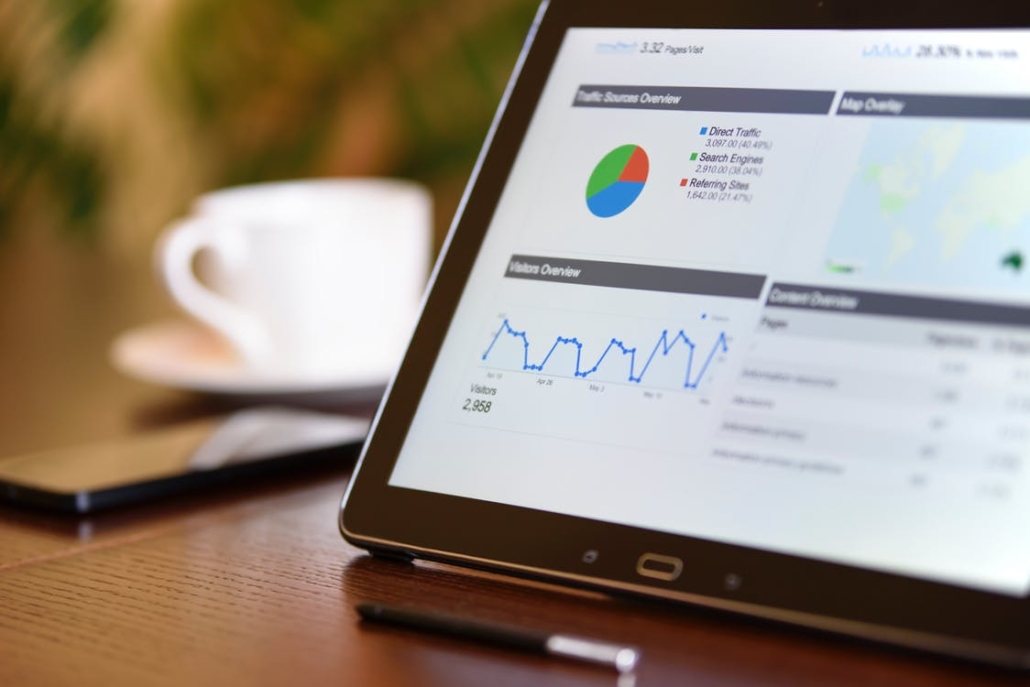
There are many web analytics services on the Internet, but Google Analytics is the biggest and the best. It tracks and reports website traffic to provide you with insightful data right at your fingertips. Use it to unearth near limitless data about your target audience’s demographic and psychographic profiles, and gain a better understanding of what they find important and interesting.

The custom reports it produces are also highly useful, allowing you to see which traffic sources convert the best so you can invest more time, money and effort into high performing traffic senders.

Target Audience on Google Analytics

Connect with your customers

Once you’ve identified your target audience, you need to make them stick around. Learn about them, understand them, and represent them on your site. You can try using social media listening tools, or manual monitoring, to learn your audience’s common dialect and understand their social media conversations.

Then, it’s time to take the plunge and dabble in your own online networking. Connecting with your target demographic and having a strong social media presence will help build trust and loyalty between your customers and your brand. Done right, your social media marketing will also provide proof that you are a well-connected, conscientious company that is worth following and supporting.

Blogging is also a great way to increase your following and maximise online conversations, as you’ll produce valuable optimized content that establishes your expertise to your audience.

If you need any help identifying and securing your target audience, here at Cloud9 we’d be more than happy to arrange a strategy consultancy. We focus our marketing plans around digital marketing strategies that are proven to gain customers. You can book an appointment here.

If you have a website, you’ve probably heard of SSL certificates, but are you actually aware of what they are and why they are important?

If not, keep reading…

SSL is an acronym for secure sockets layer. SSL certificates are the backbone of website security, and are vital for any business with an online presence, especially in 2018. SSL certificates allow someone’s browser to bridge a secure connection to your server, ensuring that the information is securely transferred.

You can tell if a website is SSL secure by looking at the URL structure. If a website’s URL starts out with “http,” it is not SSL secure. If it starts with “https,” then it is secure. Some browsers will also display a small lock icon to indicate you are browsing a secure website.

Here are a few reasons why all of this is important.

1. Stops Information Theft

When information is submitted on a website, it usually goes through a channel of computers before it reaches the intended party. So the chances of that information being stolen along the way are higher if SSL is not applied. SSL encrypts the information so that it’s readable only to the party it is intended for. It does this by adding random characters to the submitted information, which can only be accessed with an encryption key. The information is useless to anyone who doesn’t have that key.

With identity theft on the rise, information security is more important than ever. SSL ensures you keep everyone’s information safe, which builds confidence in people who are visiting your site.

2. Provides a Sense of Security to People Visiting Your Website

With identity theft on the rise, information security is more important than ever. SSL ensures you keep everyone’s information safe, which builds confidence in people who are visiting your site.

3. A Necessity for Online Payments

An SSL certificate is a requirement for any website that accepts payments with an encryption of at least 128-bit. So, if you have an ecommerce site, you have to have an SSL certificate installed if you plan on taking credit card payments.

4. It’s Mandatory in 2018

To ensure safer browsing in 2018, Google flagged any website that doesn’t have SSL certification by the end of 2017. It’s important to note that this change will affect all websites and not just ecommerce sites. So, if you’re a restaurant owner, lawyer, dentist, realtor or consultant, don’t fall into the trap of thinking that this change doesn’t apply to you. It does.

Now that January 1st has passed, when people try to access a website without a SSL certification, a ‘Not Secure’ message will appear, which will more often times than not prompt them to leave.

Maintaining an online presence can be tough, so don’t make it any harder for yourself than it already is. If you don’t already have an SSL certificate on your website, NOW is the time to do so. If you would like to speak with a Cloud9 hosting specialist about making your website secure, contact us today.

Google recently announced that at some point in 2018 they will be switching to mobile-first indexing. This huge change means that Google will now determine SEO rankings based on the quality of businesses mobile sites, rather than the desktop version. If you want your business to rank effectively for local searches, it’s important you start focusing your efforts on the mobile-friendliness of your site. We’ve outlined for you the difference between desktop and phone searches, and how you can adjust your mobile site to improve your local SEO ranking.

What’s the different between desktop and mobile?

Most laptop and computer searches have delayed search intent. This means that users may be searching for your business from home or work to see if you have what they need, but don’t plan to visit you straightaway.

This can also be true for mobile searches, as people usually grab the nearest device to them to look something up. However, most mobile searches come with immediate search intent, as people are already out and looking for places to visit in the area. Focusing on this immediacy, and having simple, readily available answers for mobile users, is crucial to optimizing your local SEO.

How do I optimize my local business for mobile?


  • Focus on Voice Searching

Phone users tend to avoid lengthy searches, as typing on a small device can be frustrating. Using audio is becoming the easiest and most popular way to search online, thanks to the rise of mobile chat bots and devices like Google Home, Amazon Echo and Apple Homepod. This means searches have become much more conversational, as customers actually say what they are looking for. By optimizing your site for shorter keywords, and common spoken phrases like ‘near me’ or ‘where can I find’, you can tailor your site to provide an optimal mobile experience.

  • Increase your Speed

Rather surprisingly, people are typically more patient on mobile than on desktop. That being said, 19% of people will abandon a page if it takes longer than 5 seconds to load. To create a frictionless experience, you should really attempt to improve your site speed. This can be done by tweaking your site to reduce the amount of redirects you include, and by grouping assets like JavaScript and CSS, so the browser has fewer files to load. You can also optimize and scale your images, and use browser caching.

  • Create a Mobile-friendly Design

Ultimately, if you design a mobile site with the user in mind, the results will speak for themselves. There are some great websites that can test how phone-friendly your site is, but you can first try clearing all the clutter and pop-ups from your site. Adjust your typography for a small screen, and make sure you leave enough room between clickable elements for fingers and thumbs. You can also try having a responsive design that can adapt to all screens: this means your site is all on one URL and will be easier for Google to index.

With mobile traffic now eclipsing desktop traffic, it’s important to improve your mobile site to keep up with these changes. If you need some help optimizing your site for mobile, our team at Cloud9 Marketing would be more than happy to help.

Whistler offers an amazing array of top-quality services and companies. While this is what makes us such an incredible community, it also means that there is a lot of competition for local businesses. Your website allows you to speak to the entire online world, but if you’re offering local services you need to be predominantly targeting potential customers in Whistler. Optimizing your website for your geographical area is essential for boosting your SEO, and for showing customers exactly where they can find you. Here are our top tips on how you can improve your local SEO and generate better traffic through location-based searching.

#1 Get on Google My Business

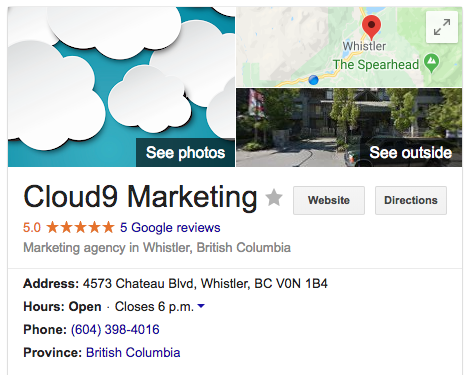
Registering your business with Google My Business is the first step to optimizing your local SEO. It’s completely free to do, and allows you to manage your online presence across Google’s search pages, including Maps. It asks you to fill in a mini summary of your business that gets displayed at the top of Google’s results pages. This means it is essentially the first impression potential clients will get of your business, before even clicking on your website. It’s also important to update this on a regular basis with new photos, information, hours, etc. As well, encourage your customers and clients to review your business on Google – even a few reviews looks good.

Local SEO Map Pack

What people see when they Google Cloud9 Marketing

#2 Keep your contact information consistent

It’s crucial that all your information is the same across online platforms. Not only does this make it easy for customers to find you, but also it shows you uphold a reliable business. NAP (your company’s name, address and phone number) is your digital thumbprint, and if this information fails to align across the different online profiles of your business, Google will recognise these inconsistent listings. The more times Google ‘sees’ your thumbprint on reputable websites, the more confident it becomes that it is displaying a trustworthy business in its search results.

#3 Build your online credibility

Even though this one takes time, having a solid catalogue of good reviews on your page is going to elevate your local credibility and improve your SEO ranking. A recent survey found that 84% of people trust online reviews as much as personal recommendations. Don’t be afraid to sincerely ask customers for reviews, and make it easy for them to do so by offering a multitude of potential review sites to use, such as Google+, Facebook and Yelp.

#4 Connect with other local Whistler businesses

If the Internet didn’t exist, you’d probably have to promote your business through regular networking, or by joining a Whistler business group, right? The truth is, you should still be doing the equivalent of this online. Start liaising with other local businesses and linking them on your site, and this will hopefully encourage them to return the favour. By engaging with respected companies you will show search engines that you are a trusted, reliable source.

#5 Write great content

If you keep producing quality, locally orientated content, then results will naturally follow. Keep your customers interested and engaged to increase their affinity with your brand. This can be via content promotions, polls, or just some interesting posts about what’s going on in Whistler next weekend. Maintaining steady blog posts and social media posts demonstrates your involvement in the local community, and can be a super effective way to increase your SEO.

Check out our tips on blogging to improve your SEO!

If you’re looking to get your Whistler business out there and feature on local search results, we can help. Cloud9 Marketing offers free SEO audits at no obligation.

build-email-list

When fighting in the battle against established website giants to rank on Google’s first page, blogging for your company may fall at the bottom of your to do list. However, blogging can be one of the most effective (and cheapest) ways to master SEO and establish your website as truthful and reliable. It allows you to build upon your internet presence and increase interactions with other respected websites, and the everyday user, to get those all-important clicks. Below is a breakdown of how regular blogging can help your company triumph in SEO rankings and maximize your organic traffic.


#1: Blogging shows you’re relevant

First of all, maintaining and updating a blog shows search engines, and users, that your company is alive! The search engine spiders that crawl through the internet love fresh, updated content: similar to a singer with no new tracks, if you fail to keep a steady stream of new content, search engines could miss your site and assume it is losing its relevance. It’s all about elevating your internet presence, so don’t be afraid to include images and videos in your posts too, as these will give search engines even more ways of finding you.


#2: Blogging builds your reputation

Having a blog is the easiest way to demonstrate your in-depth knowledge of your field, and helps you to gain the trust of potential company followers. You can also associate your website with established and trusted sites through backlinking. By including related links in your writing, you not only give search engine algorithms big hints on what your page is about, but you also show users you really know your stuff. Guest blogging can also be a great way to boost your SEO, as working with writers who are experts in a similar field to you can really help your company’s repute.


#3: Blogging makes it easy to use SEO tricks of the trade

Keyword optimization is one of the most well known ways to drive traffic towards your site. But as everyone seems to know this already, it makes it impossible to compete with trusted mature websites using the same terms, right? While this may be true for obvious keywords, having a blog allows you to use long-tail keywords that can be tied back to your company. Here’s a great website that generates long-tail keywords suggestions for each search term.


#4: Blogging creates that all-important social media buzz

Though some companies still struggle to see the point of having a strong social media presence, Google actually returns social media search results. Connecting a blog to platforms such as Facebook and Twitter will give broaden your online platform so both search engines and users can find you. What’s more, the great thing about blog posts is that they are easily shareable. People are far more likely to share an interesting blog post over a company’s service page, and blogs shared move up in search rankings, so spreading your company across social media will really help elevate it.


#5: Blogging increases your online **sprawl**

A new blog post can be one of the easiest ways to optimize your website. This is because, each blog posts counts as a new indexed page on your website, which are basically pages found by search crawlers that have been deemed to have enough quality for relevant search phrases. The more posts you write the wider your overall online presence will stretch, and the longer users will stay on your company’s site as they hopefully get drawn in by other posts.


#6: Blogging is free

That’s right, setting up a blog and reaping all those benefits can be completely free. Even if you don’t have the time to do it yourself, paying for help can be one of the cost effective and most rewarding ways to improve your SEO quality.

Here at Cloud 9 Marketing our team of writers specialize in producing interesting content that drives traffic and brings results. For help, contact us today.

marketing-resolutions

Did you nail it with your marketing in 2017, or did you leave a lot to be desired with your online presence? In a world where marketing is changing as quickly as Trump’s latest piece of bad press its important to prioritize your marketing while being strategic in your approach. Although it’s hard for us to understand, not all business owners love marketing, some find it frivolous or  down-right cringe-worthy.  Whatever your blocks, fears or distractions with marketing may be, it is in your best interest to prioritize your marketing in 2018, here are some marketing resolutions to stick to.

Thou shall engage in live video

It’s all about live video in 2018, whether that be Facebook Live, Instagram Live for live streaming on Youtube, the story-telling and engagement possibilities with live video is beyond any other form of messaging at the moment. You may be hearing a lot of virtual reality and machine learning, these things are coming too but for now, the most interactive experience you can give your current and potential customers is the experience of live video.

Thou shall delegate my marketing if I’m unable to prioritize

Many businesses start the year gung-ho with marketing which slowly takes a back seat as the year goes on while other, more pressing business matters take priority. Just because marketing doesn’t scream and wave for your attention, doesn’t mean it isn’t important. If you find you’re constantly being called to other areas of your business, or are too busy to give marketing the creativity and attention it deserves, it’s time to delegate your marketing to someone else who can give it all the love it needs.

Thou shall understand my web analytics

So many businesses have a website and an online presence but have no idea how effective either are. Understanding your web analytics will be hugely insightful as to how your online marketing efforts are performing and ways to tweak and optimize current performance to be even more effective. Being able to navigate Google Analytics should be the very basic step of understanding web analytics. Having a clear picture of your online position, including a solid grasp of search engine optimization (SEO) will help your business immensely in 2018.

Thou shall invest in digital marketing

In the new year make sure to prioritize digital marketing, and by prioritizing it we mean, allocating money to this very valuable aspect of your business. In a world where social media dominates content and engagement you must pay to play to really reap the benefits. If you’re not ranking well on search engines for important key words you may want to consider Google Adwords pay-per-click advertising to get those coveted click throughs to your website. You can’t ignore the return on investment with digital marketing, it’s measurable, tangible and undeniable in 2018.

Thou shall be clear about my 2018 marketing strategy

A clear marketing strategy is the starting point for a successful year of marketing in 2018. Define your marketing budget, outline your marketing goals and create a strategy to help you achieve these. Your goals may want to consider revenue, customer acquisition, engagement and/ or brand awareness. The beginning of the year is the perfect time to get crystal clear on your marketing goals, schedule time to do this in the next few weeks right now.

As mentioned, marketing isn’t everyone’s jam however almost everyone understands the importance of a solid online presence backed by a goals-driven marketing strategy. If you’re ready to up-level your marketing game in 2018 and need help, contact the team at Cloud9 Marketing, we’ve got your back.

facebook-algorithm

As a marketer, the importance of Facebook is undeniable; however, the application of it can be hair-pulling at best and down-right tantrum producing at worst. What makes one post the talk of the town, and the next one an utter flop perplexes even the most skilled marketers at times. The magic behind the Russian roulette of Facebook posts is the almighty powerful Facebook algorithm. An algorithm is a formula or set of steps used for solving a particular problem. Facebook uses its algorithm to sort, sift and make sense of the huge number of posts that are created each day to ensure the user experience is one that is useful and enjoyable.

Facebook’s algorithm ranks posts using the following four steps:

Inventory- What posts are available at the current time to show

Signals- Looking at available data called signals, Facebook ranks the content. Data is pulled from who posted the story, the current time, what device it was posted with and how much time is spent reading a particular post.

Predictions- Using these signals, Facebook makes predictions based on what you will do with the post (how likely you are to comment, like or share).

Score- Facebook assigns each post a score based on all of these things, this score dictates the posts that are displayed in a newsfeed.

As a marketer managing client’s Facebook accounts, yielding top results for clients is a priority. Maximizing Facebook reach and enhancing engagement are important metrics that clients expect in the age of social media. Facebook will look for the following characteristics when assigning a relevance score to a post:

  • Who posted the story, how often they post and is there any negative feedback on the page or author?
  • How engaging the post is, how much time is spent on the content, and how many tags, comments and shares does it have?
  • The completeness of the page profile
  • Who generated the post, a friend or a business page?
  • How informative is the post?

All of these things impact the probability of a post being seen; the more engagement, the quality of the user, how useful and informative the post is, and how close the post creator is to the user will dictate relevance score and likeness to be seen by a given Facebook user. Friends and family posts are favoured over business page posts.

What Facebook likes

Creating content that is relevant, valuable and interesting is key to appearing organically in news feeds. Ensuring posts are informative, promote engagement, are positive in nature and are free of errors is important. It is proven that pages with a consistent posting schedule outperform ones that post randomly and sporadically.

Here are some things that the Facebook algorithm favours:

  • Posts with lots of likes, comments and shares (even better if it’s in a short period of time)
  • Posts with engagement from close friends
  • Posts that have other pages tagged
  • Posts with an active and engaged audience, creating a brand ambassador program or influencer marketing program is ideal for this
  • Links in posts
  • Users tend to prefer status updates, photos and videos the most
  • Videos uploaded to Facebook that get a large number of views or longer viewing session rank well (according to a 2016 Quintly study videos received a 109.67 percent higher interaction rate and 477.76 percent higher share rate).
  • Posts mentioning a trending topic
  • Posts from pages with complete profile information

What Facebook doesn’t like

Just as the Facebook algorithm favours certain types of posts, it also penalizes posts that don’t conform with its overarching values and mission. The following posts types and actions will negatively effect relevancy score and ensure your posts are at the end of the browsing queue.

  • Posts that are clickbait (click a link to take to another website)
  • Like-baiting, trying to get likes without providing useful content
  • Posts with spammy links
  • Repeated posts
  • Text-only posts or status updates
  • Posts that are hidden by users or are reported
  • Posts that ask for engagement (likes, shares, comments)
  • Over promotional posts

Recent Algorithm changes

Facebook is consistently updating its algorithms to ensure the user experience is high and to evolve with the changing landscape of social media. Here are some recent changes in 2017 that affect what people see and how they engage with Facebook content:

August 2017

  • Pages sharing false news can no longer run Facebook ads
  • Posts that pretend to be videos will be demoted
  • Posts with slow loading links will be shown less

May 2017

  • Posts with click-bate headlines will rank lower
  • Posts that link to low- quality websites will rank lower

January 2017

  • Authentic and timely posts will receive a better
  • Long engaging videos will rank better than short engaging videos

Staying up to date with Facebook’s ever-changing algorithm is imperative to ensuring you are delivering the best results to your clients. By ensuring content is relevant, timely, informative and engaging, utilizing videos and having a solid page presence and well functioning website are all fundamentals to hitting home runs on Facebook. Cloud9 Marketing are experts in Whistler BC on everything social media, any questions about Facebook algorithms or to see our social media management packages, make sure to contact us.